
TRONG THANH CONSTRUCTION CO., LTD.
LEGAL CONSULTING AND FACTORY CONSTRUCTION
02513 686 155


TRONG THANH CONSTRUCTION CO., LTD.
LEGAL CONSULTING AND FACTORY CONSTRUCTION
02513 686 155
Cemboard is a lightweight material widely used in industrial factory flooring construction, especially in projects that require reduced structural dead weight while ensuring high durability and load-bearing capacity.
Cemboard is also known by other names such as: cement board, lightweight concrete board, simbo board, etc. It is composed of a mixture of cellulose fibers, Portland cement, silica sand, and inorganic compounds. All these materials combine to form a solid, durable Cemboard with excellent fire resistance and water resistance.
Key Advantages:
Despite its many outstanding advantages, Cemboard flooring still has several limitations to consider when applying it to factory projects:
Therefore, before selecting Cemboard flooring for a factory, businesses need to carefully consider the actual operational load and specific environmental conditions to ensure durability and investment efficiency. With its flexibility and optimized cost, Cemboard flooring is an ideal choice for light to medium factories, warehouses, or projects requiring fast execution while still ensuring long-term durability.
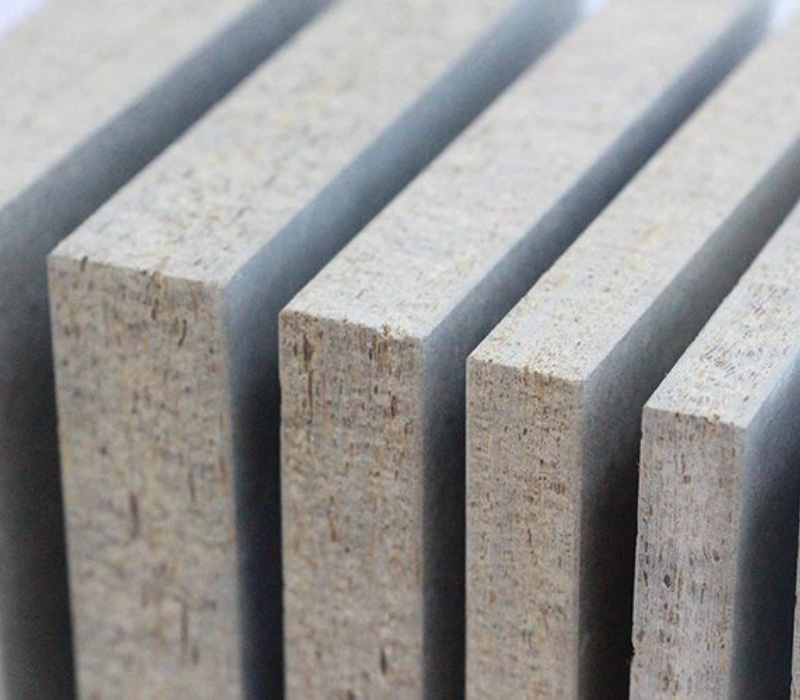
Cemboard cement board used for flooring
Concrete flooring is the most traditional and common choice for industrial factory floors due to its low cost and high load capacity. This type of floor is typically poured directly on-site over a steel reinforcement structure, making it suitable for a wide range of basic medium and large-scale factories.
Advantages:
Disadvantages:
This floor type is commonly seen in mechanical workshops, manufacturing plants, and general warehouses, or used as a sub-base prior to applying epoxy or PU coatings for performance upgrades. When properly treated, concrete flooring remains an economical and effective solution for many types of manufacturing.
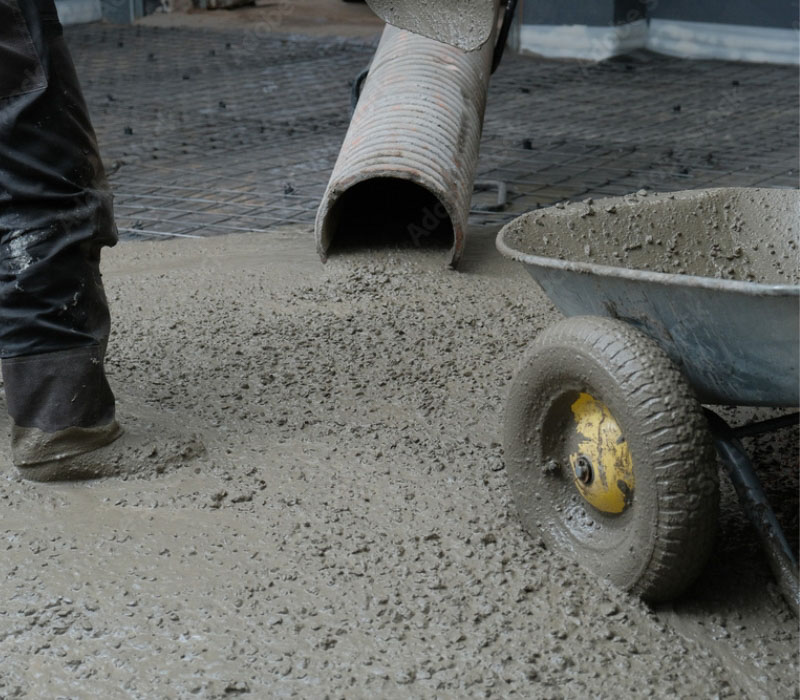
Poured concrete flooring offers cost-effective installation
Considered one of the premium finishing solutions for industrial factory floors, Epoxy flooring is often applied in factories with strict hygiene, safety, and aesthetic standards. The epoxy coating is a mixture of epoxy resin and a hardener, which forms a seamless, smooth, high-gloss, and extremely durable surface after application.
Advantages:
Disadvantages:
Areas such as pharmaceutical workshops, high-end warehouses, food processing facilities, and electronic component plants frequently require clean, safe, anti-slip environments—reasons why epoxy flooring is highly preferred.
In addition to offering great durability and subfloor protection, this flooring option elevates the project’s appearance, catering to businesses that value operational professionalism and efficiency.
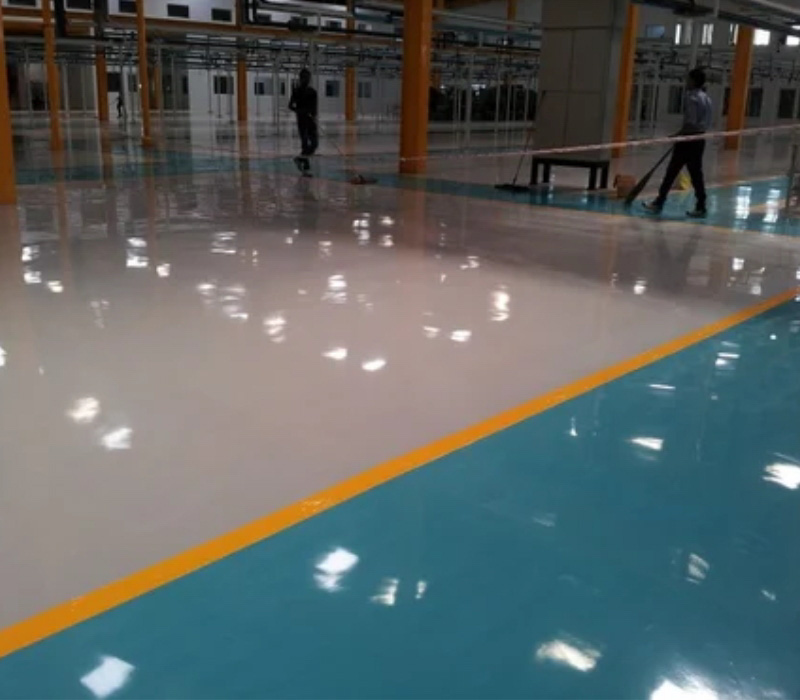
Epoxy coated flooring provides high aesthetic appeal
Anti-static Vinyl flooring is specifically engineered to control electrostatic discharge—a factor capable of causing severe damage to sensitive electronic components. This flooring is made from synthetic resin combined with carbon fibers, stone powder, and conductive additives, effectively conducting and dissipating static charges.
Advantages:
Disadvantages:
This flooring type is commonly used in cleanrooms, electronics assembly workshops, server rooms, data centers, and high-tech manufacturing facilities where electrostatic control is vital to ensure device and process safety.
Despite its load and durability limits, specialized static control makes it an optimal flooring choice for high-tech environments demanding absolute precision and electrical safety.
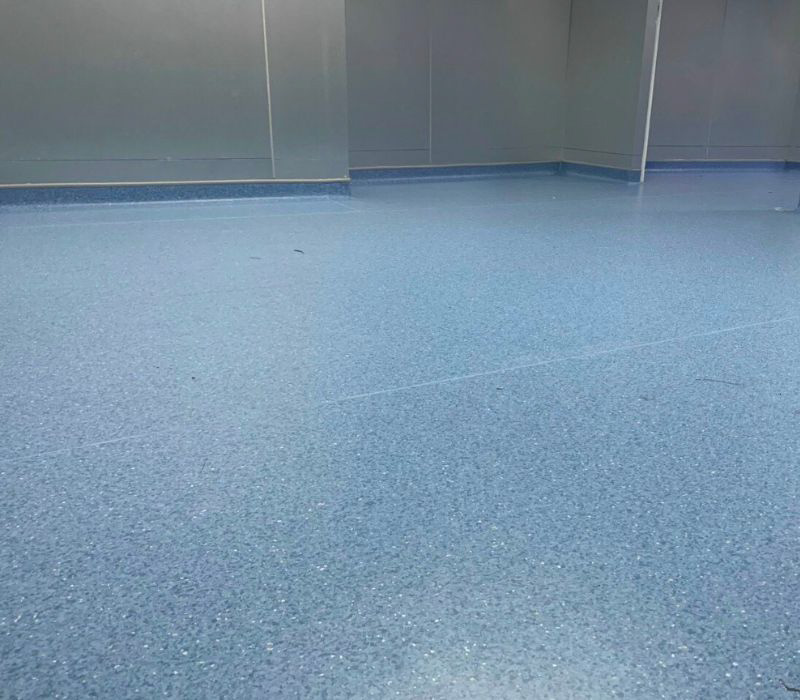
For specialized industries needing static control during manufacturing, Vinyl flooring is a suitable choice
For specialized industrial environments like cold storage facilities, pharmaceutical workshops, and food processing plants—where high antibacterial performance, low-temperature resistance, and mechanical durability are required—PU flooring is the top choice. It is a 4-component, solvent-free Polyurethane resin system that is self-leveling, producing a smooth, seamless, and easy-to-clean surface.
Advantages:
Disadvantages:
Featuring cold resistance, antibacterial capabilities, and high durability, PU flooring is an ideal choice for factories operating under extreme environmental conditions with strict safety mandates.
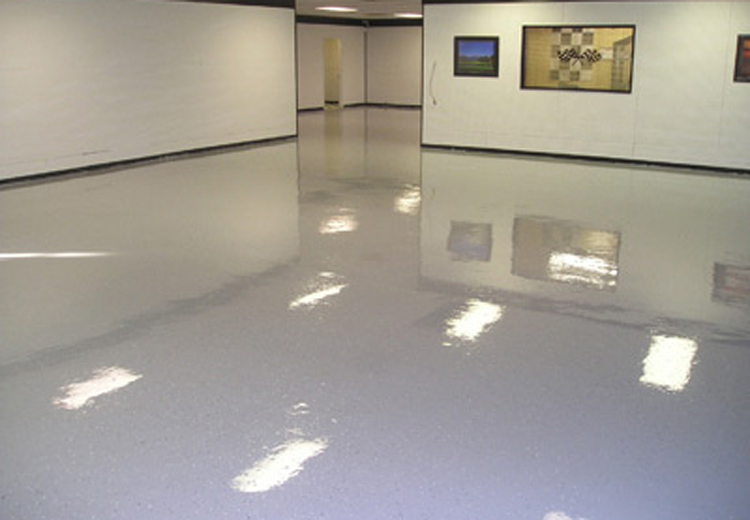
PU (Polyurethane) flooring is also widely utilized
If a factory requires soft, noise-reducing, and safe-to-walk-on flooring, industrial rubber flooring is worth considering. Installed as sheet mats that are directly laid out and fixed with nails or adhesive, it is typically used in light operational zones, technical corridors, or high-foot-traffic walkways.
Advantages:
Disadvantages:
Industrial rubber flooring provides shock absorption and slip resistance, making it an optimal choice for areas prioritizing daily operational comfort and safety. However, it requires stable ambient conditions to maximize service life.
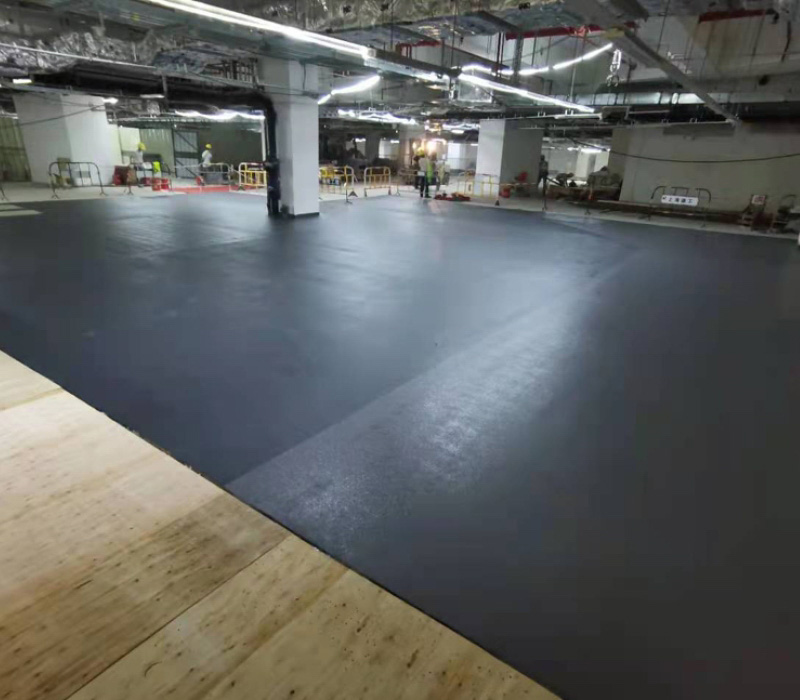
Industrial rubber flooring requires careful maintenance
When additional spatial capacity is needed without expanding the building footprint horizontally, mezzanine flooring is a popular choice to maximize vertical building height. It is a secondary structure supported by a load-bearing steel frame, usually topped with Cemboard or steel plates to form a sturdy floor surface.
Advantages:
Disadvantages:
Mezzanine floors are commonly seen in mechanical, food processing, and logistics facilities where operational space and storage need clear separation. It is a smart way to expand usable area without incurring additional land construction costs.
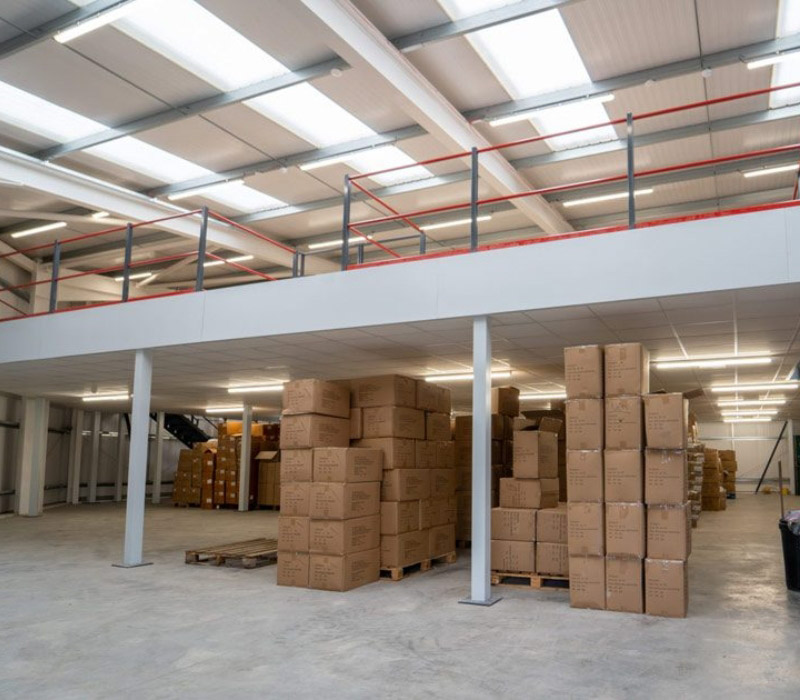
Factory mezzanine flooring helps expand usable space without requiring additional horizontal building footprints.
 56B, Group 9, Area 10, Tam Hiep Ward, Dong Nai city
 02513 686 155 - Zalo: 0916482945 - Fax: 02513 686 153
 xdtrongthanh2009@gmail.com
 www.trongthanhconstruction.com

Hotline


